
IRD202 Elite Kit - Vibration Meter and Bearing Health Checker with Memory
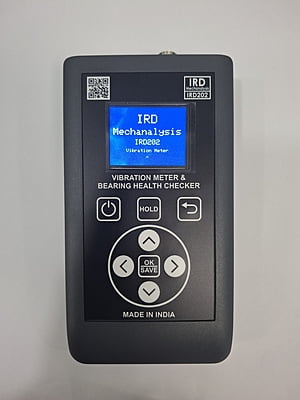
Portable vibration meter and bearing health checker with memory.
- Measures acceleration, velocity and displacement (RMS, peak, peak-to-peak; metric or imperial) plus Spike Energy (gSE) for early bearing faults.
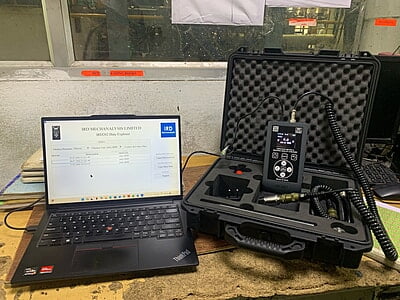
- Saves date/time-stamped readings and exports them to Excel via the IRD202 Data Explorer PC software.
- Colour-coded velocity reading (green/yellow/orange/red) by ISO 20816-3 severity zones, with selectable machine group and support type.
- 4000 mAh rechargeable battery, charged over USB-C.
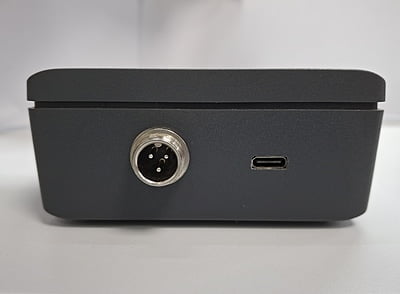
IRD202 Elite – Vibration Meter and Bearing Health Checker with Memory
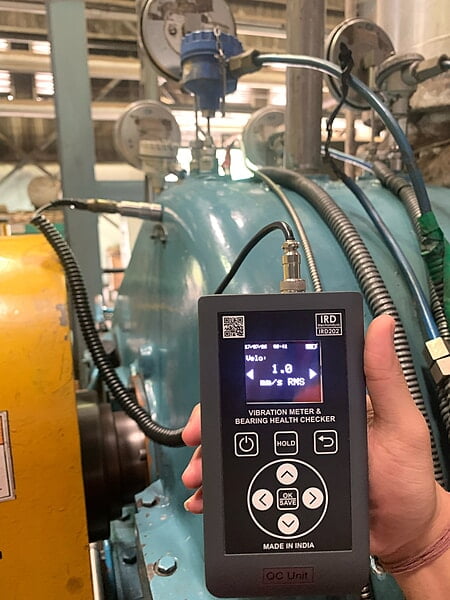
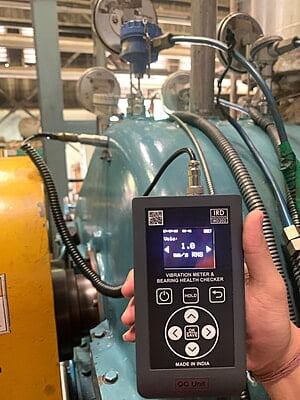
The IRD202 Elite is a portable vibration meter and bearing health checker designed and made in India by IRD Mechanalysis. With a single accelerometer it measures machine vibration as acceleration, velocity and displacement, in metric or imperial units, as RMS, peak or peak-to-peak values. It also measures Spike Energy (gSE), IRD's long-established method for spotting early anti-friction bearing problems.
New: colour-coded vibration severity (ISO 20816-3)
The IRD202 now shows the vibration velocity reading (mm/s RMS) in colour, based on the ISO 20816-3 vibration severity zones: green for Zone A, yellow for Zone B, orange for Zone C and red for Zone D. Technicians can see at a glance whether a machine is in good condition, acceptable, needs attention or is at risk of damage.
All new IRD202 units ship with firmware V1.1, which includes colour-coded severity.
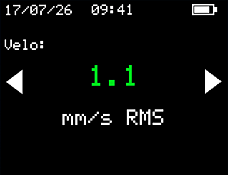
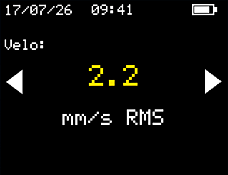
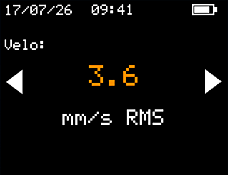
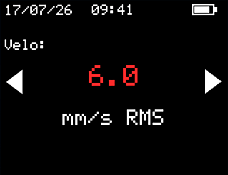
Representative display
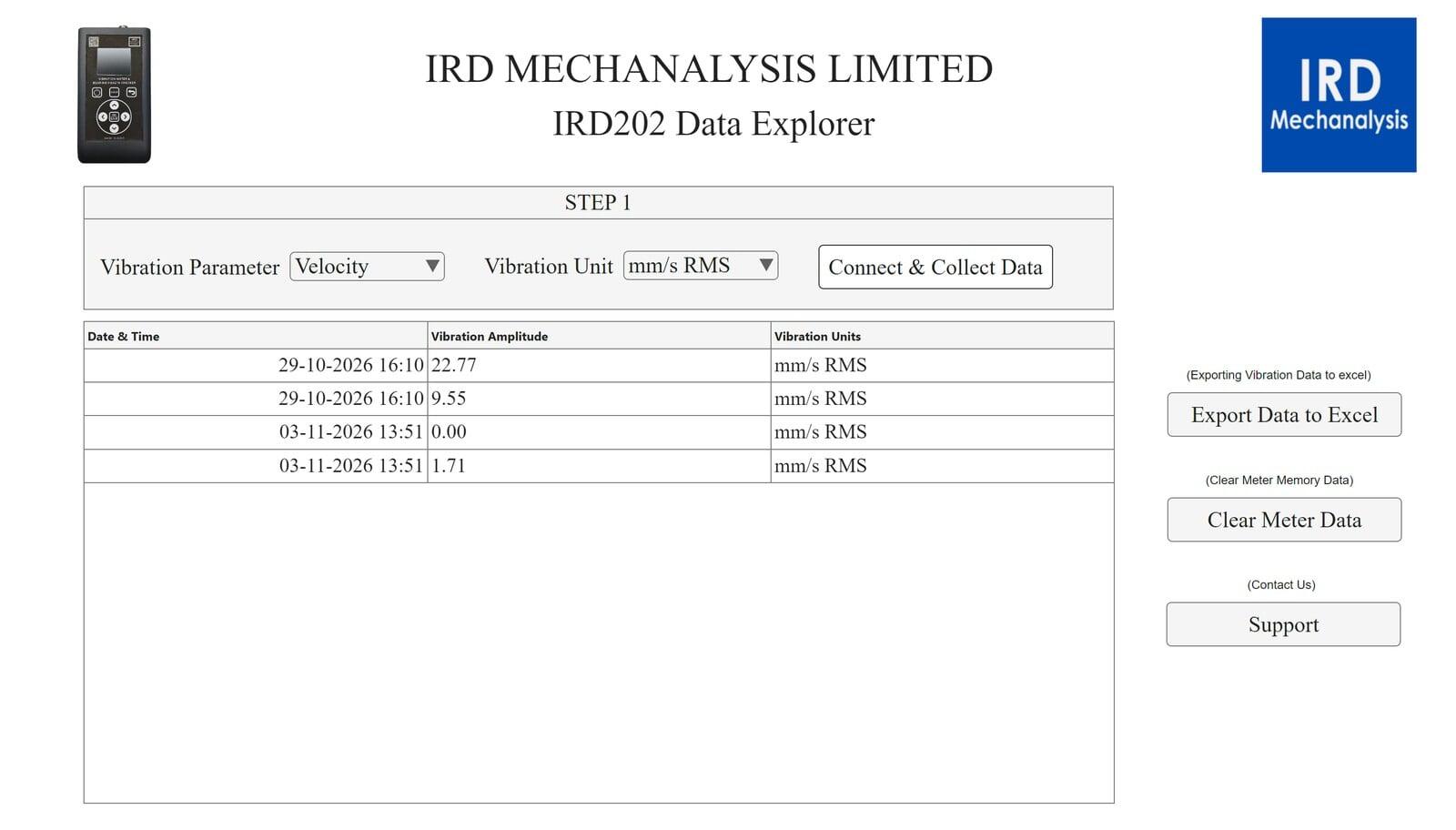
Unlike a basic meter, the IRD202 remembers what it measures. The technician sets the instrument's date and time and saves on-screen readings with a time stamp. Back at the desk, the readings transfer over USB-C to the Windows-based IRD202 Data Explorer software, where they can be viewed by parameter and unit and exported to Excel for reports and trending.
The meter runs on a 4000 mAh lithium-polymer battery that charges through the same USB-C port used for data transfer. It works with the IRD521 accelerometer (2-pin, IEPE/ICP, 100 mV/g); any IEPE/ICP 2-pin, 100 mV/g accelerometer can be used. IRD also offers calibration of the IRD202 together with its IRD521 sensor.
IRD202 Data Explorer PC software
Specifications
| Parameter | Value |
|---|---|
| Acceleration | g pk, g RMS, m/s² pk, m/s² RMS |
| Velocity | mm/s pk, mm/s RMS, in/s pk, in/s RMS |
| Displacement | µm pk-pk, µm pk, mils pk-pk, mils pk, mm pk-pk, mm pk |
| Severity indication | Colour-coded velocity (mm/s RMS) by ISO 20816-3 zones A–D, selectable machine group and support type |
| Accuracy | ±10% of expected reading |
| Bearing condition | Spike Energy (gSE) |
| Sensor input | IEPE/ICP 2-pin accelerometer, 100 mV/g (IRD521) |
| Memory | Date/time-stamped readings |
| PC software | IRD202 Data Explorer (Windows), Excel export |
| Interface / charging | USB-C |
| Battery | 4000 mAh Li-Po, rechargeable |
| Warranty | 1 year |
ISO 20816-3 colour zones
Zone limits for velocity in mm/s RMS, by machine group and support type:
| Machine group | Support | Zone A (green) | Zone B (yellow) | Zone C (orange) | Zone D (red) |
|---|---|---|---|---|---|
| Group 1 | Rigid | below 2.3 | 2.3 – 4.5 | 4.5 – 7.1 | above 7.1 |
| Group 1 | Flexible | below 3.5 | 3.5 – 7.1 | 7.1 – 11.0 | above 11.0 |
| Group 2 | Rigid | below 1.4 | 1.4 – 2.8 | 2.8 – 4.5 | above 4.5 |
| Group 2 | Flexible | below 2.3 | 2.3 – 4.5 | 4.5 – 7.1 | above 7.1 |
How to set: open the ISO Setting menu and choose the machine group (Group 1 or Group 2) and support type (rigid or flexible). The factory default is Group 2, rigid.
Under ISO 20816-3, Group 1 covers large machines (above 300 kW) and Group 2 medium machines (15 kW to 300 kW). Colour zones are a guide; judge alarm limits against your machine's own history.
Typical uses
- Routine route checks on motors, pumps, fans and blowers
- Early bearing-defect screening using Spike Energy (gSE)
- Acceptance checks after repair or alignment
- Quick go/no-go severity checks against ISO 20816-3 colour zones
- Simple trend records in Excel for maintenance reports
Frequently asked questions
Which sensor does the IRD202 use?
The IRD521 accelerometer (100 mV/g, 2-pin). Any IEPE/ICP 100 mV/g 2-pin accelerometer also works.
Can I save readings?
Yes. Readings are saved with date and time stamps, transferred to IRD202 Data Explorer, and can be exported to Excel.
How is it charged?
Through USB-C, the same port used for data transfer.
How is the IRD202 different from the IRD811D Pro?
The IRD202 adds memory and PC export, and uses a USB-C rechargeable battery (the IRD811D uses a 9V rechargeable battery).
What do the colours on the IRD202 display mean?
The velocity reading (mm/s RMS) is coloured by ISO 20816-3 severity zone: green (Zone A), yellow (Zone B), orange (Zone C) and red (Zone D). Choose your machine group and support type in the ISO Setting menu; the factory default is Group 2, rigid.
What is the warranty?
The IRD202 carries a 1-year warranty.
Do you calibrate it?
Yes. IRD offers calibration of the IRD202 together with its IRD521 sensor.
Need a quotation or a demo?
| Request a Quote |
Or call 022-4897 2000