Vibration Monitoring of Pumps
Introduction
Online vibration monitoring is usually needed for critical pumps—the ones whose failure can stop production, affect safety or environment, or cause very expensive downtime. It is especially useful for pumps that are hard to access, run 24/7, or have known failure risks like cavitation, imbalance, seal problems, or bearing issues
Pumps that should get Online Monitoring
Process-critical pumps, where an unexpected trip would stop a plant or unit.
Large vertical pumps, because they often need more thorough monitoring than small pumps.
Pumps in continuous service, especially in water/wastewater, power, petrochemical, and refinery applications.
Hard-to-access pumps, such as wet wells, galleries, or confined spaces.
Pumps with high consequence of failure, where downtime or product loss is costly.
Pumps with recurring vibration problems, such as cavitation, imbalance, looseness, coupling issues, or seal-related faults.
Typical Examples
Boiler feed pumps.
Cooling water pumps.
Circulating water pumps.
Charge pumps and transfer pumps in refineries and chemical plants.
Vertical turbine pumps in utilities and water systems.
Firewater pumps where reliability is critical.
Pumps that feed a single critical process line with no standby.
When Onine Monitoring is not necessary
Not every pump needs continuous online vibration monitoring. Smaller, low-cost, easily replaceable pumps with low consequence of failure can usually be handled with periodic route-based checks or basic preventive maintenance. For many plants, a tiered approach works best: continuous monitoring for critical pumps, periodic checks for important but non-critical pumps, and simple PM for low-risk pumps.
Practical Rule
Use online vibration monitoring when the pump is:
critical to production or safety,
difficult to inspect regularly,
expensive to fail,
or already showing abnormal vibration trends.

Online Systems for Pump Vibration Monitoring

IRD591 - Loop Powered 4-20mA Output
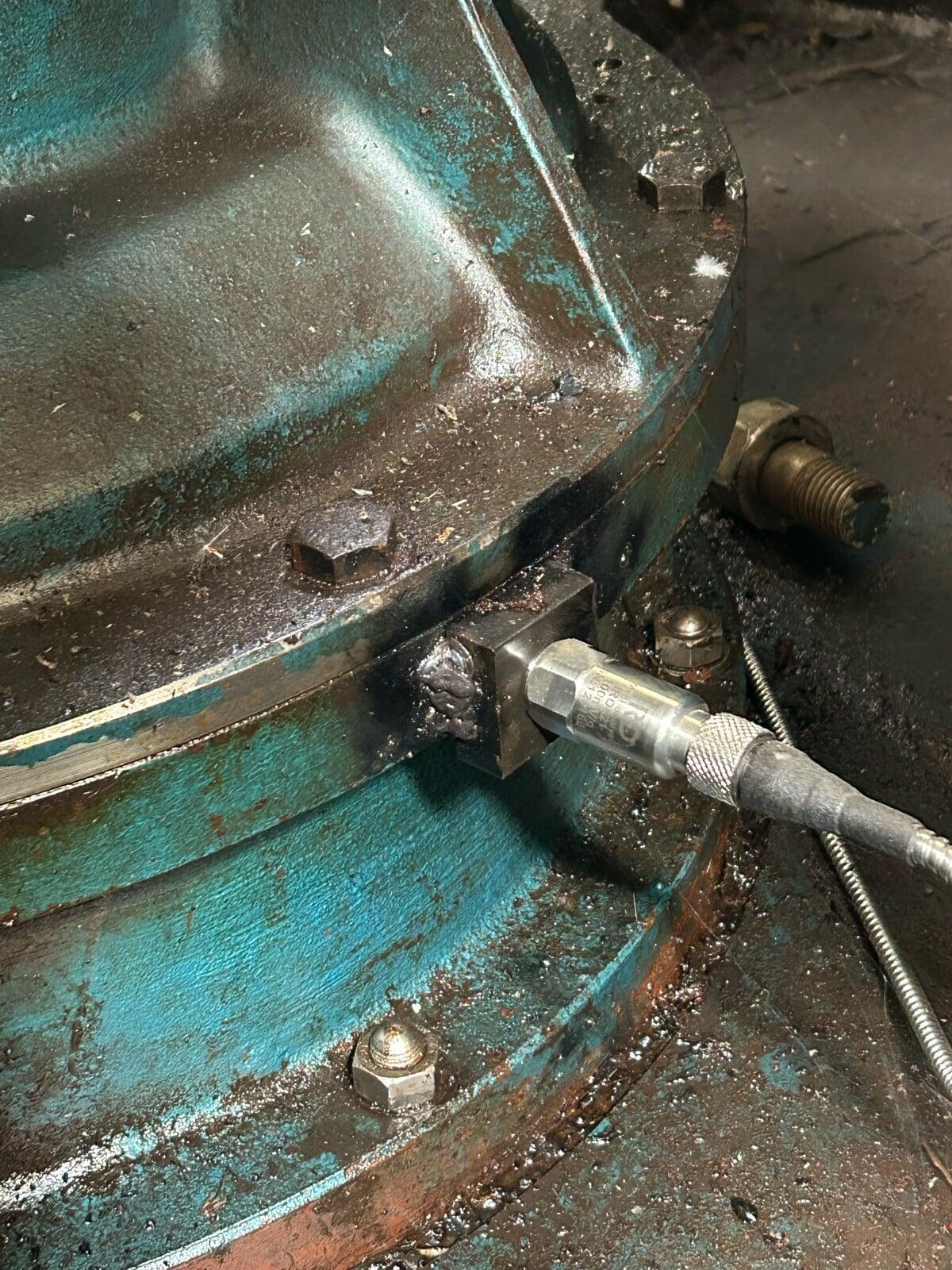
The easiest and most cost effective way of Vibration Monitoring of Pumps. Sensor gets mounted on Bearing in Horizontal, Vertical, Radial or Axial Direction. Measured Vibration is transmitted via 4-20mA to DCS/PLC/SCADA/Cloud
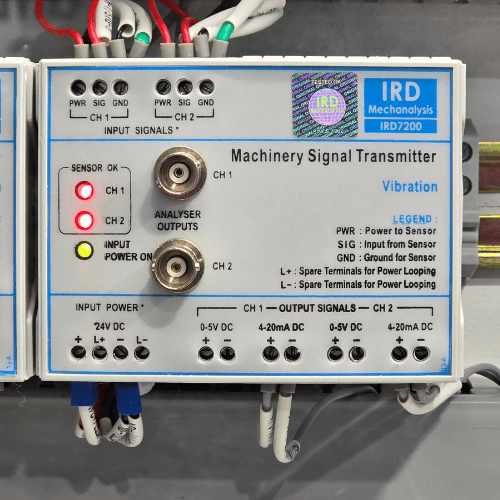
IRD7200 - Din Rail mounted Transmitter
IRD7200 allows Vibration Monitoring of Pumps via Contact Type Accelerometers (100mV/g) or Velometers (4mV/mm/s). Provides 4-20mA, 0-5V DC and Buffered Output per Channel. Data can be connected to DCS/PLC/SCADA/Oliver

IRD7100 - Wall Mounted Transmitter
IRD7100 can be wall mounted within a Panel or on any Surface. It can be ordered for Casing Vibration or Shaft Vibration. It can do all that IRD7200 can do and brings in addition Relay Contacts and Live Displays in a Weatherproof Enclosure
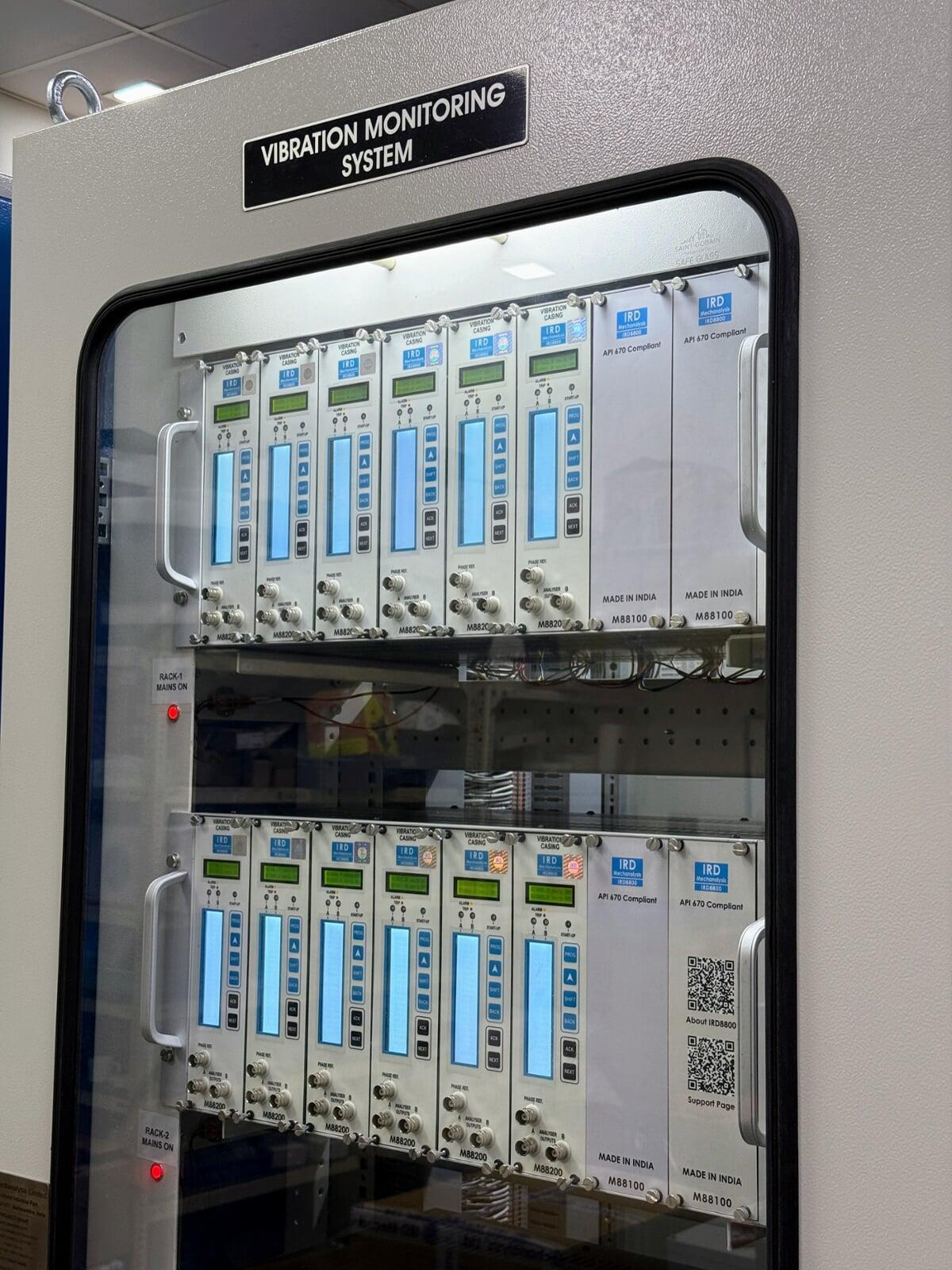
IRD8800 - Rack Mounted System
IRD8800 is a Machinery Protection System (MPS) and is API670 Compliant. It features a Microprocessor based monitoring system ideal for High Channel Density. Modules are Hot-Swappable and Password-Protected