
Vibration Monitoring via Rack Mounted API 670 Compliant IRD8800 Machinery Protection System (MPS)
Casing, Shaft and End Winding Vibration | API670 Compliance | 3 Years Warranty
Jump to Desired Section using these Quick Links
Introduction
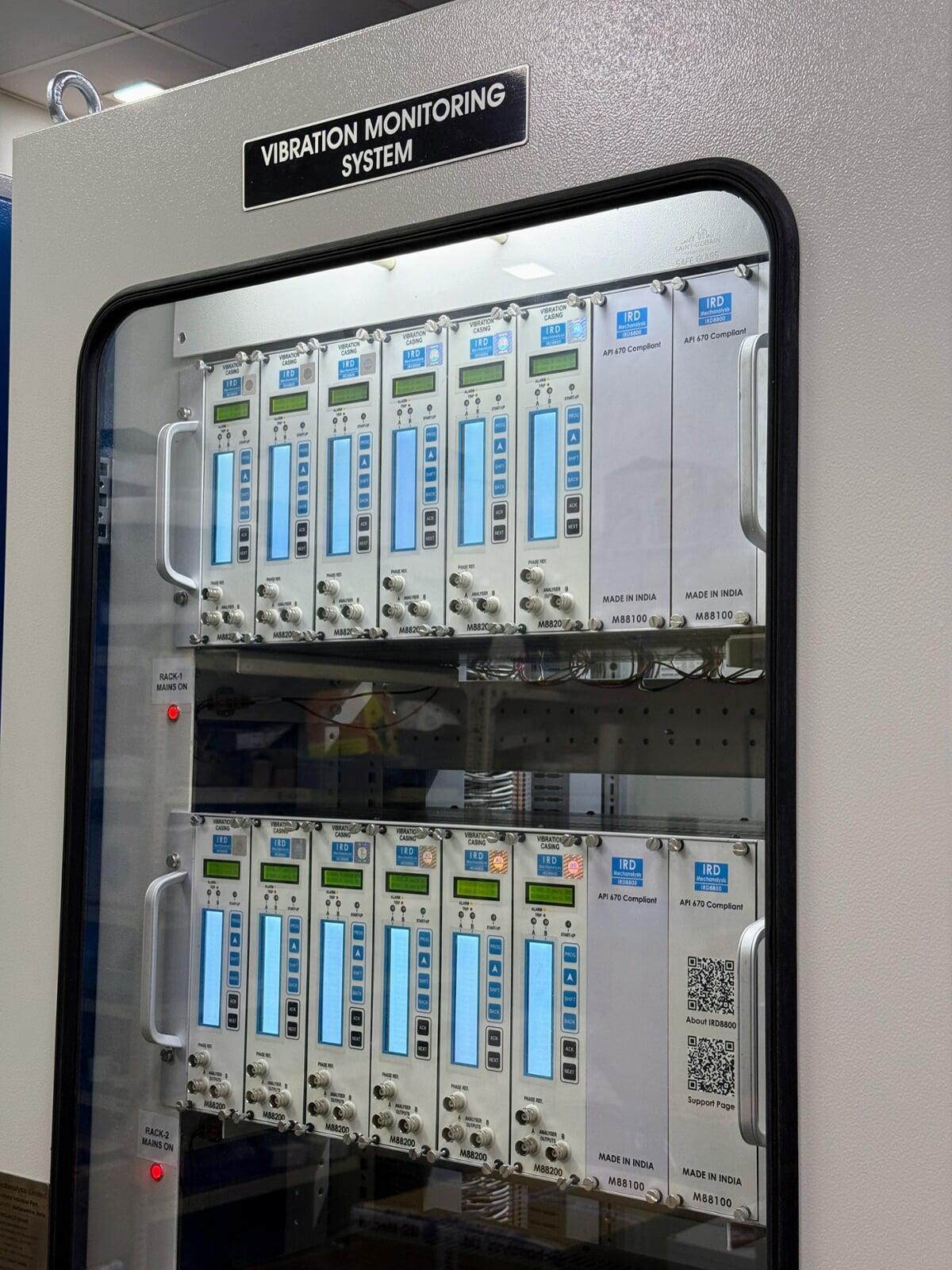
IRD Mechanalysis Limited has been a Condition Monitoring Solutions provider to the World since 1962. Also commonly referred to as 'IRD' - the Solutions range from Portable Instruments to Online Systems for Vibration, Temperature, Speed, Gap, Bearing and Turbine Monitoring. IRD provides API670 Compliant Rack Based Machinery Protection System IRD8800 that can do 24x7, 365 days Vibration Monitoring. The Salient features of this Monitoring System are:
- Live Value and Bargraph Display
- Dual Channel modules for Casing, Shaft and End Winding Vibration. No need of separate Phase reference (Keyphasor) card as each card has provision for 1 x Phase reference input apart from the 2 x Vibration Inputs
- Easy Programming using Push buttons on Keypad. Password Protection for security
- A large variety of Outputs ranging from 1:1 Buffered Output at front (via BNC) and back (via Terminals), 4-20 mA Galvanically Isolated Output, MODBUS RTU or MODBUS TCP Output and 2 sets of Alarm Relay Contacts and 2 Sets of Trip Relay contacts per channel
- Start-Up Protection that helps avoid False tripping at time of Machine Start-Up. Trip Bypass facility as Transducer Failure indication (Tx Fail)
- Compliance to API670 Edition 5 standards for Machinery Protection Systems (MPS)
Sensors used for Vibration Monitoring
Casing Vibration Sensors
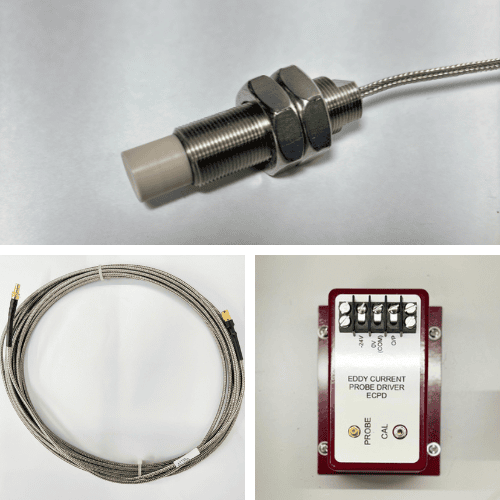
We provide Casing Vibration Sensors with a variety of Pin Configurations, Form Factors and Outputs. The options range from Top Exit, Side Exit, 2 Pin Connector, 4 Pin Connector, Separate Cable, Integral Cable and more. We provide Casing Vibration Sensors in all forms:
- IEPE type Accelerometer - where the Voltage output of the Sensor is proportional to Vibration Acceleration and Sensitivity is reported in mV/g with 100 mV/g being the most common option
- IEPE type Velometer - where the Voltage output of the Sensor is proportional to Vibration Velocity and Sensitivity is reported in mV/mm/s with 4 mV/mm/s being the most common option
- Self Generating Velometer - where the Voltage Output of the Sensor is self generating (does not require external power) and Temperature response is superior and Sensitivity is 42.52 mV/mm/s

Shaft Vibration Sensors
We provide Non-Contact Eddy Current based Sensors for Relative Shaft Vibration Monitoring. These Sensors come in sets of Probe, Extension Cable and Driver that are tuned and calibrated for a defined system length - 5 meters or 9 meters. These typically have a 8mm tip dia and 7.87 mV/um (200 mV/mil) Sensitivity. The probe is not in contact to the rotating shaft and is held in place using a bracket that is bolted or welded to the support structure
Gallery
Gallery
3 Racks of 8 Slot each along with 1 HMI for a Power Project of South India
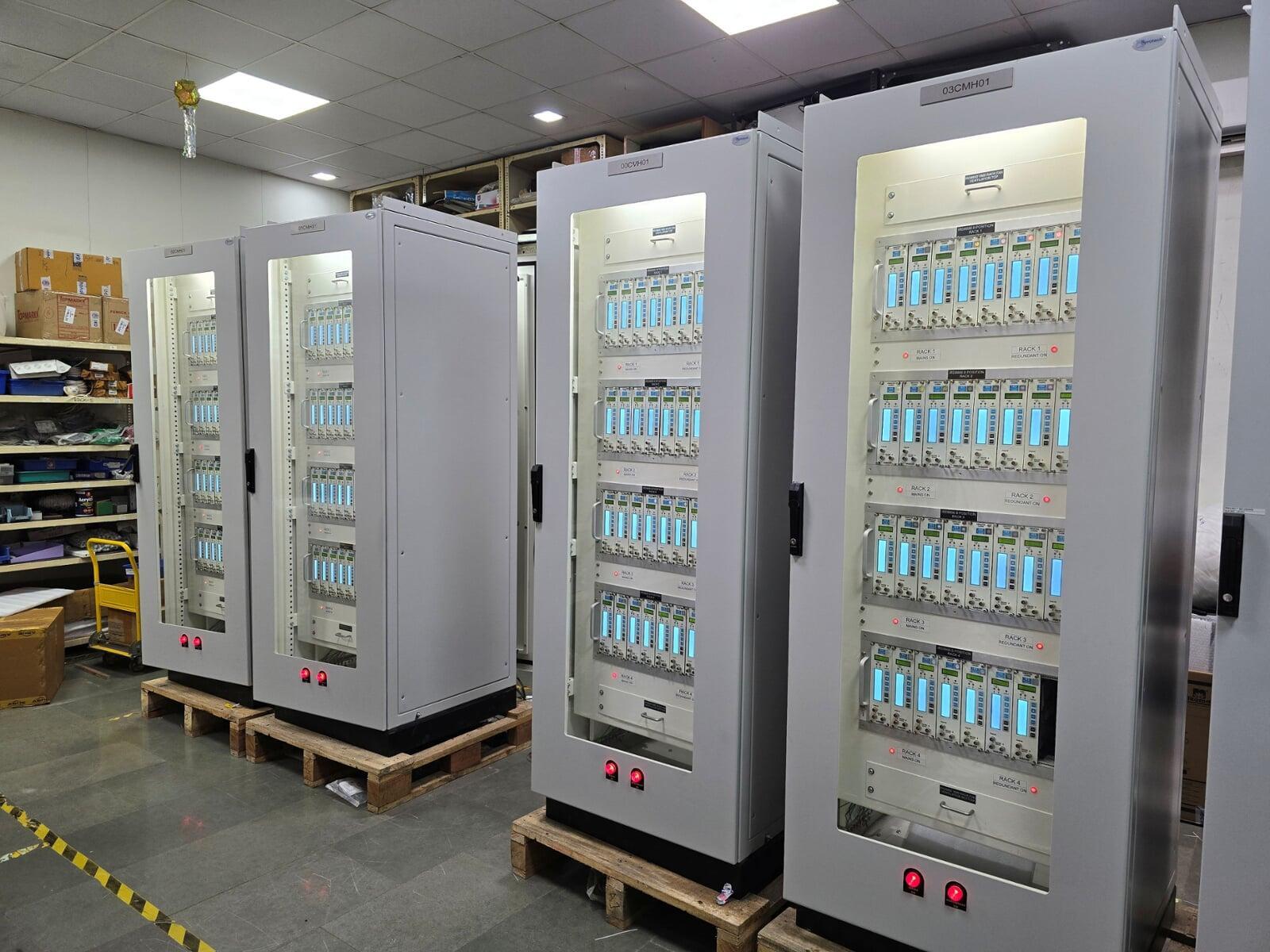
Seen here is the front view of our Vibration Monitoring System IRD8800 wherein 3 Racks having 8 Slots each are looking after a Total of 48 Channels of Vibration. For User convenience and based on their request - 1 Touch Screen HMI has been provided that allows Users to scroll through Measurements and Trends of all 48 Channels contained within the Panel. The Panel is 2200 x 800 x 800 mm in Dimension and is free standing. It has been pre-wired for Power Input, Signal Inputs and required Outputs

This is a Heading
All IRD8800 orders - be it spares or fresh supply - they go through 100 Hours of Burn-In Test. This helps establish whether all items are performing up to the mark before the Quality department undertakes final functional and calibration checks. This helps ensure peace of mind to the end user too - they get a thoroughly tested and proven system

Calibration and Quality Assurance
We take Quality seriously. We Calibrate and Test our systems thoroughly before dispatch to ensure full peace of mind for user at time of use. The steps we carry out for Calibration and Quality Assurance are:
- Thorough tracking of Raw Materials and Vendors and makes for parts and components used
- 100 hours Burn In test prior to Calibration and Functional checks
- 5 Point Calibration check using Simulated Signal as well as Real Signal
- Detailed Functional check covering each Function and Output
OLIVER - PC Software for Condition Monitoring and Vibration Analysis
- OLIVER Configuration - A utility that allows viewing and amending configuration of IRD8800 Machinery Protection System. Aspects like Full Scale, Sensor Sensitivity, Alarm Set point and more can be viewed and amended using this Utility. The utility can also be ordered for working with other Online Systems that have MODBUS Connectivity
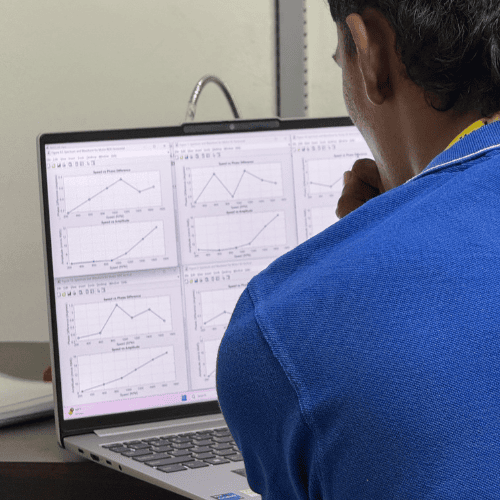
- OLIVER Basic - Has all the facilities of OLIVER Configuration. On Top of that - it adds the facility of having Custom Dashboards, Tabular Data, Live and Historical Trends, Time-to-Alarm (Remaining Useful Life) and Data Export to Excel
- OLIVER Advanced - Has all the facilities of OLIVER Basic. On Top of that - it adds the facility to view and analyse Vibration Analysis plots such as Waveform, Spectrum, Orbit, Bode, Waterfall and more
- OLIVER Extreme - Has all the facilities of OLIVER Advanced. On Top of that - it adds Rule Based Diagnostics. It analyses the Live readings against conditions and Algorithms and passes simple instructions to the User that help them identify whether the underlying problem is Unbalance, Misalignment, Looseness or something else
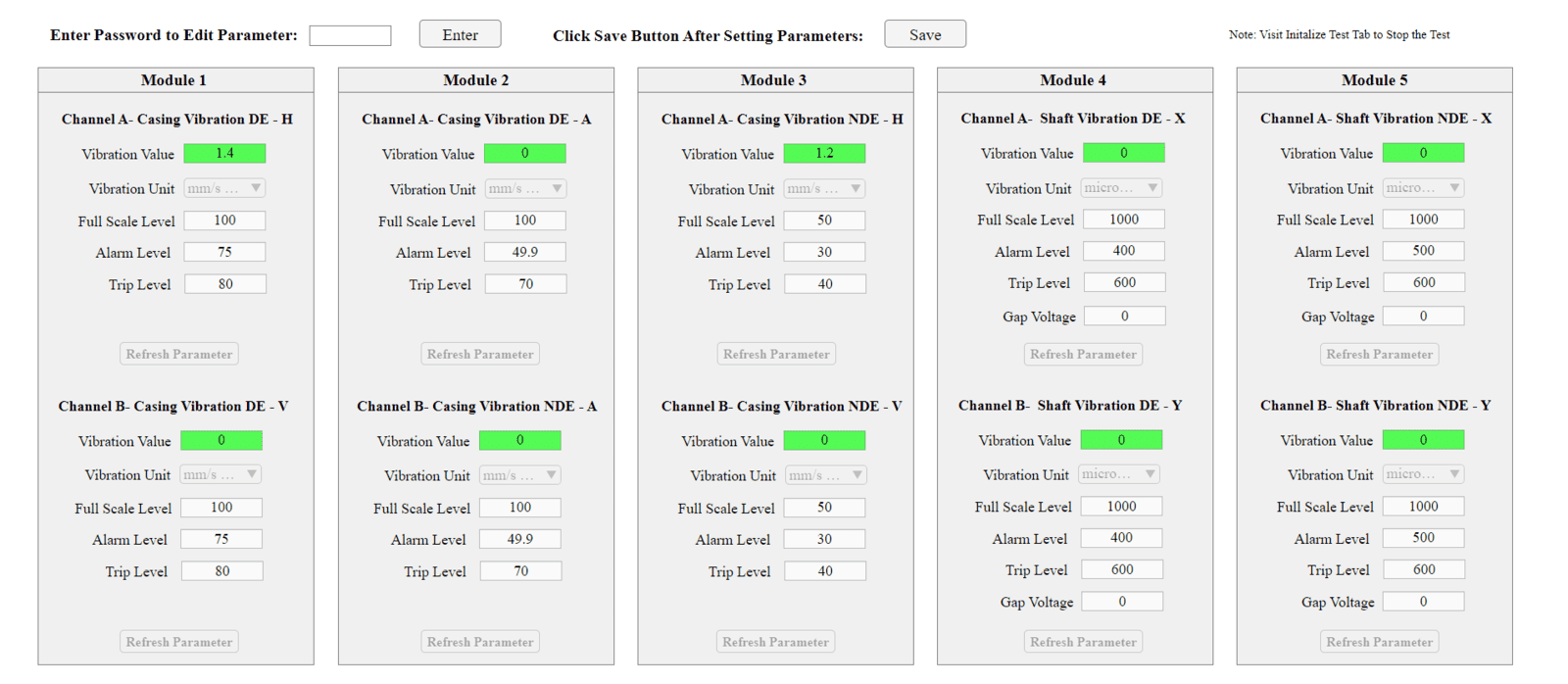
All Versions of OLIVER allow viewing and amending Configuration on Connected IRD8800 MPS
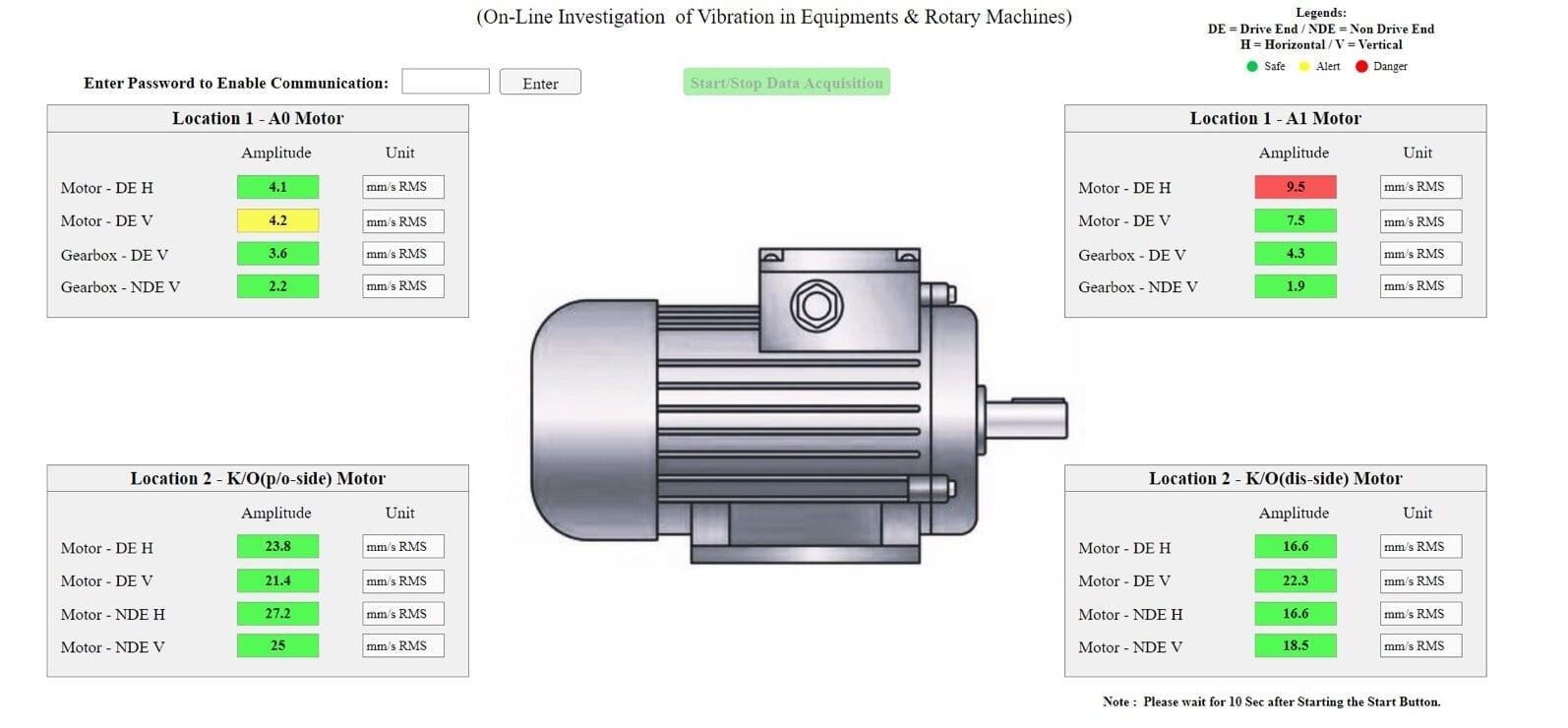
OLIVER Basic and above allows User to have Custom Dashboards with Color Coded measurements
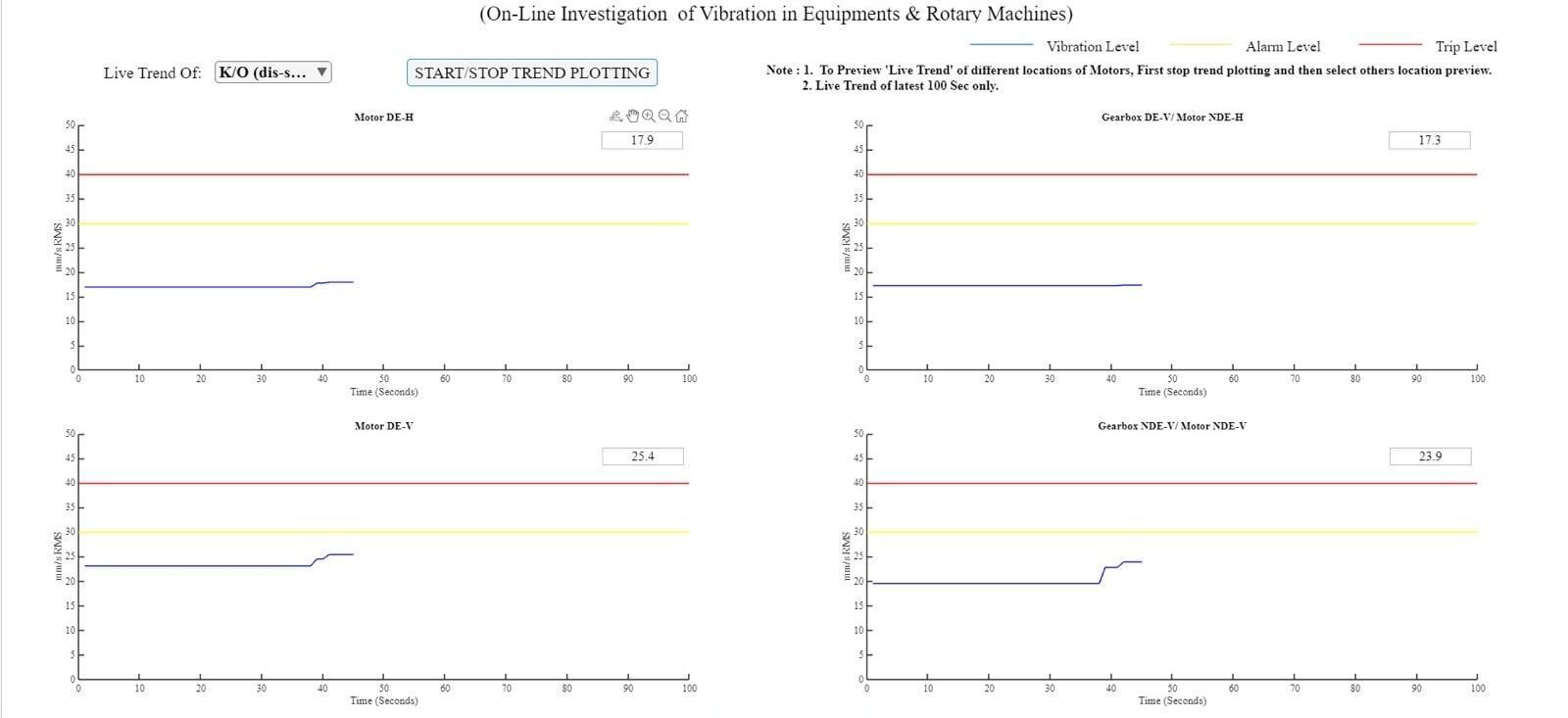
OLIVER Basic and above allows Users to view Live Trends along with Time-to-Alarm
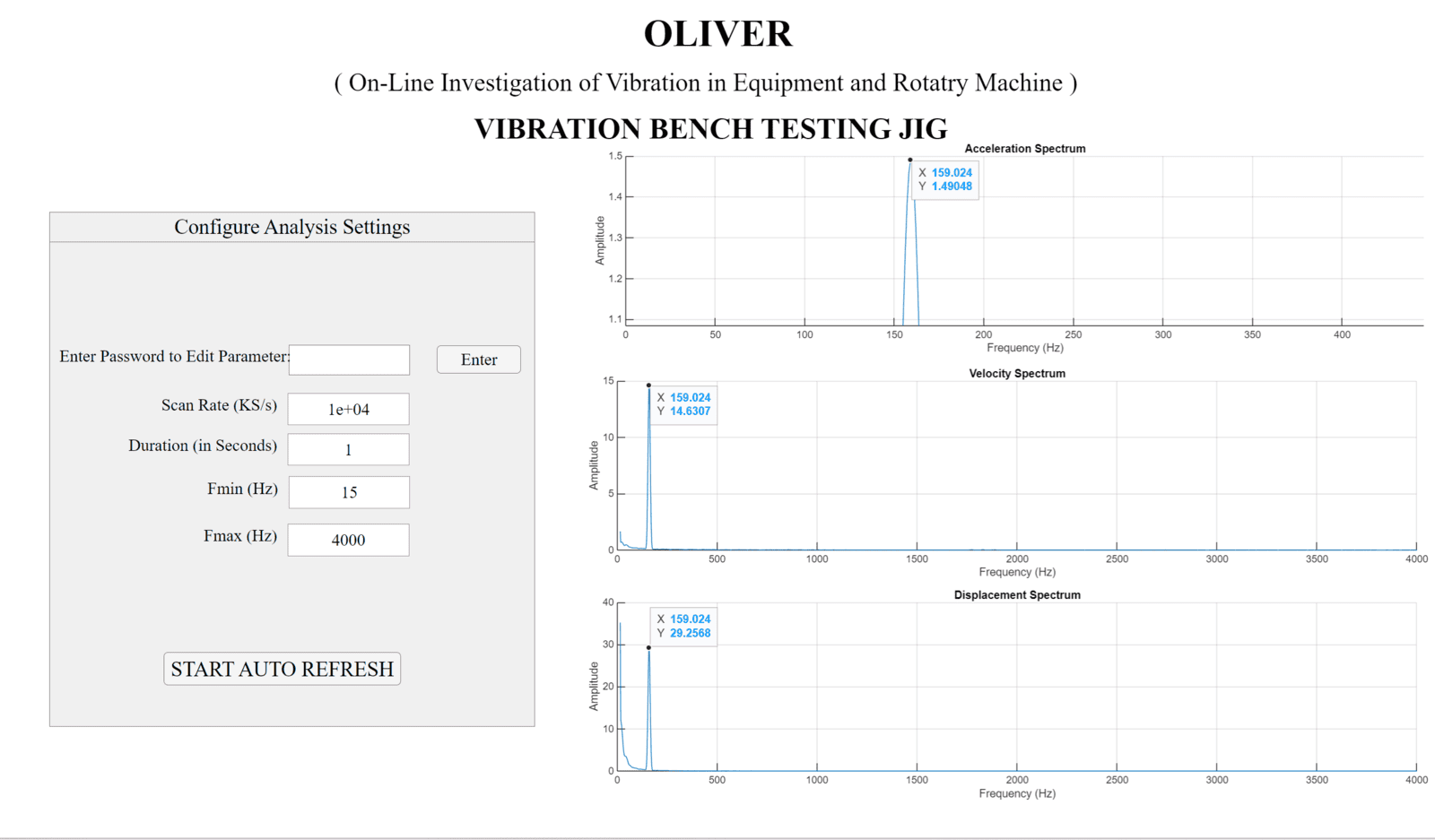
OLIVER Advanced and Extreme allow user to view Waveforms and Spectrum
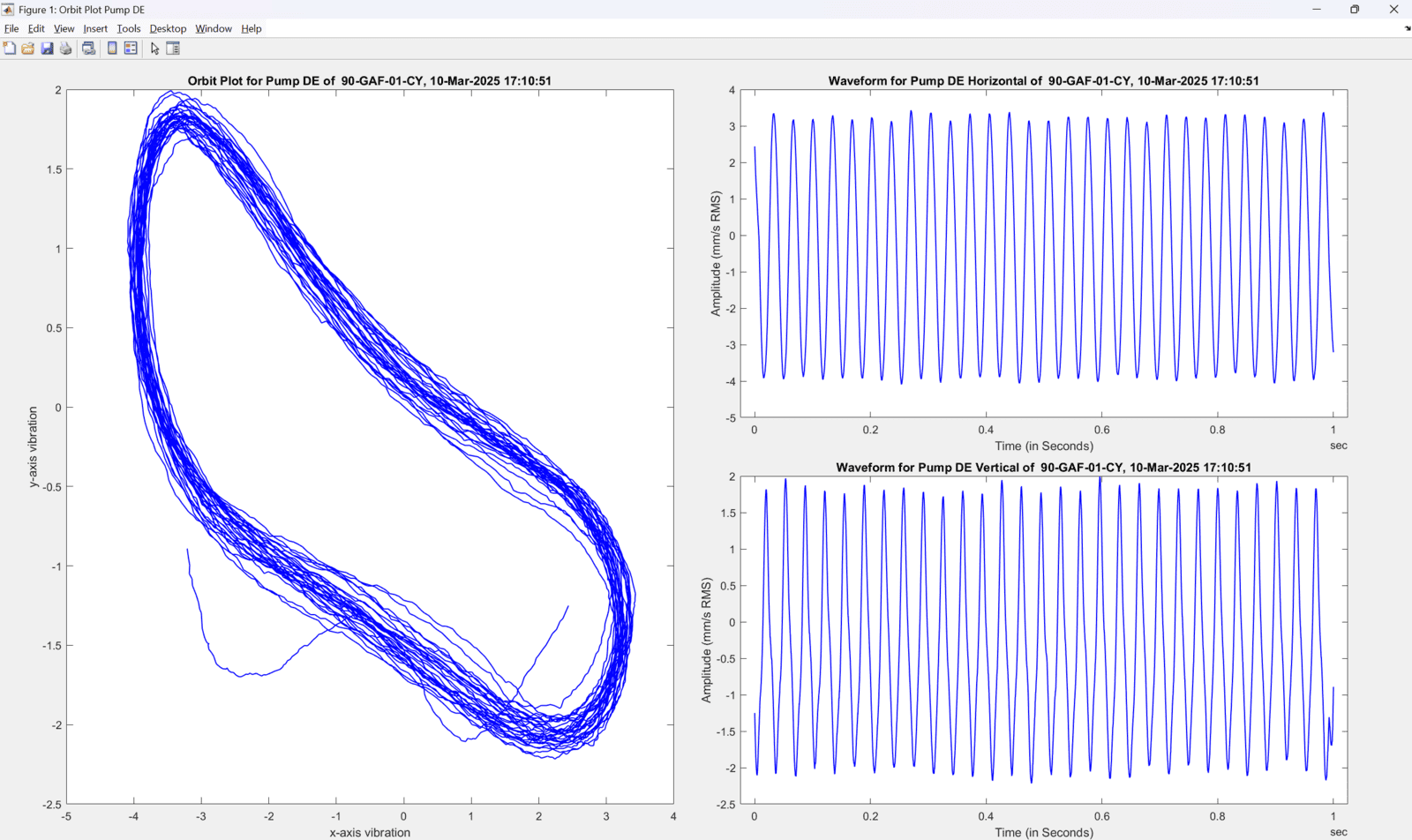
OLIVER Advanced and Extreme allow user to view Plots like Orbit, Bode, Waterfall and More
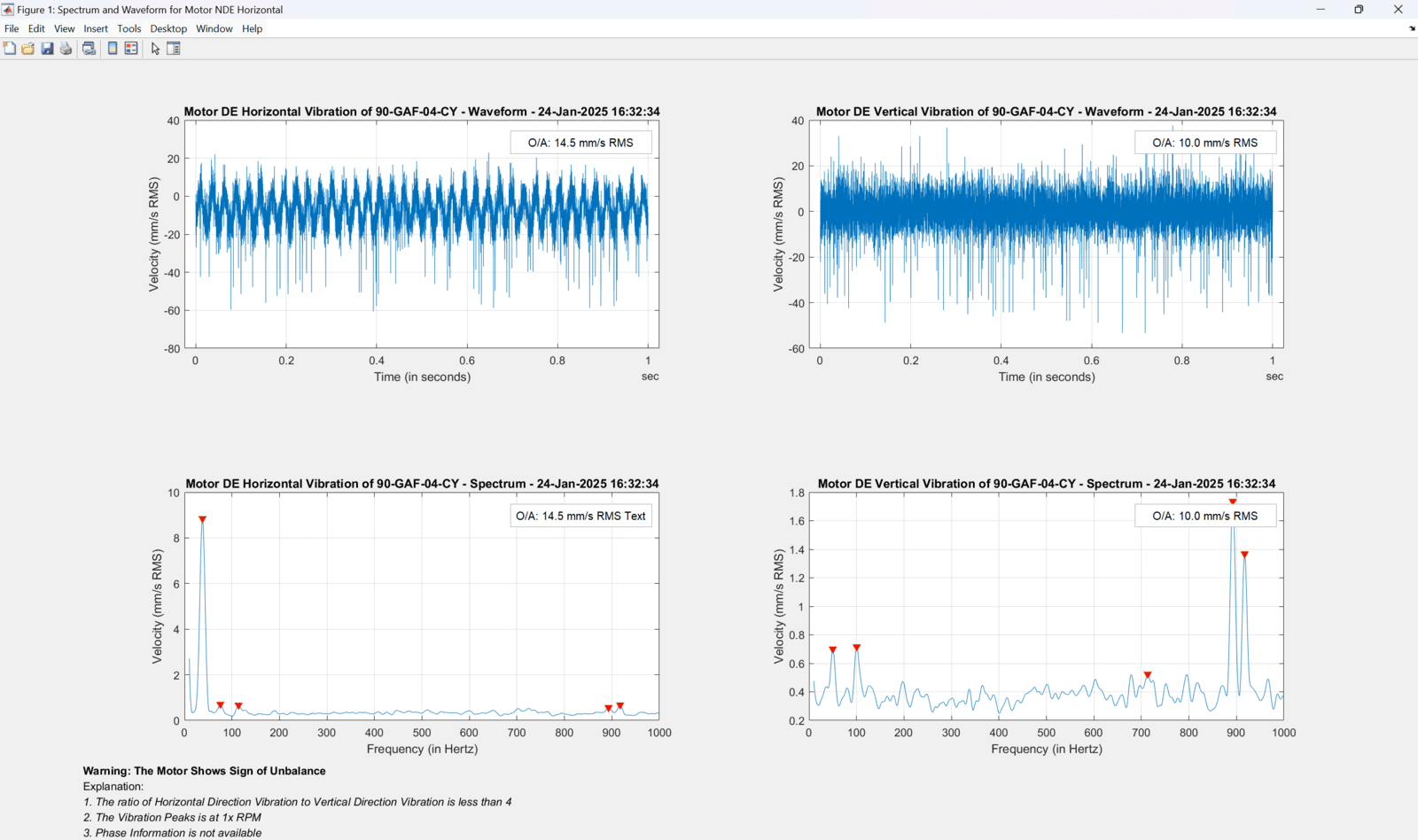
OLIVER Extreme provides Rule Based Diagnostics to help Diagnose Unbalance, Misalignment and more
Connectivity to Cloud
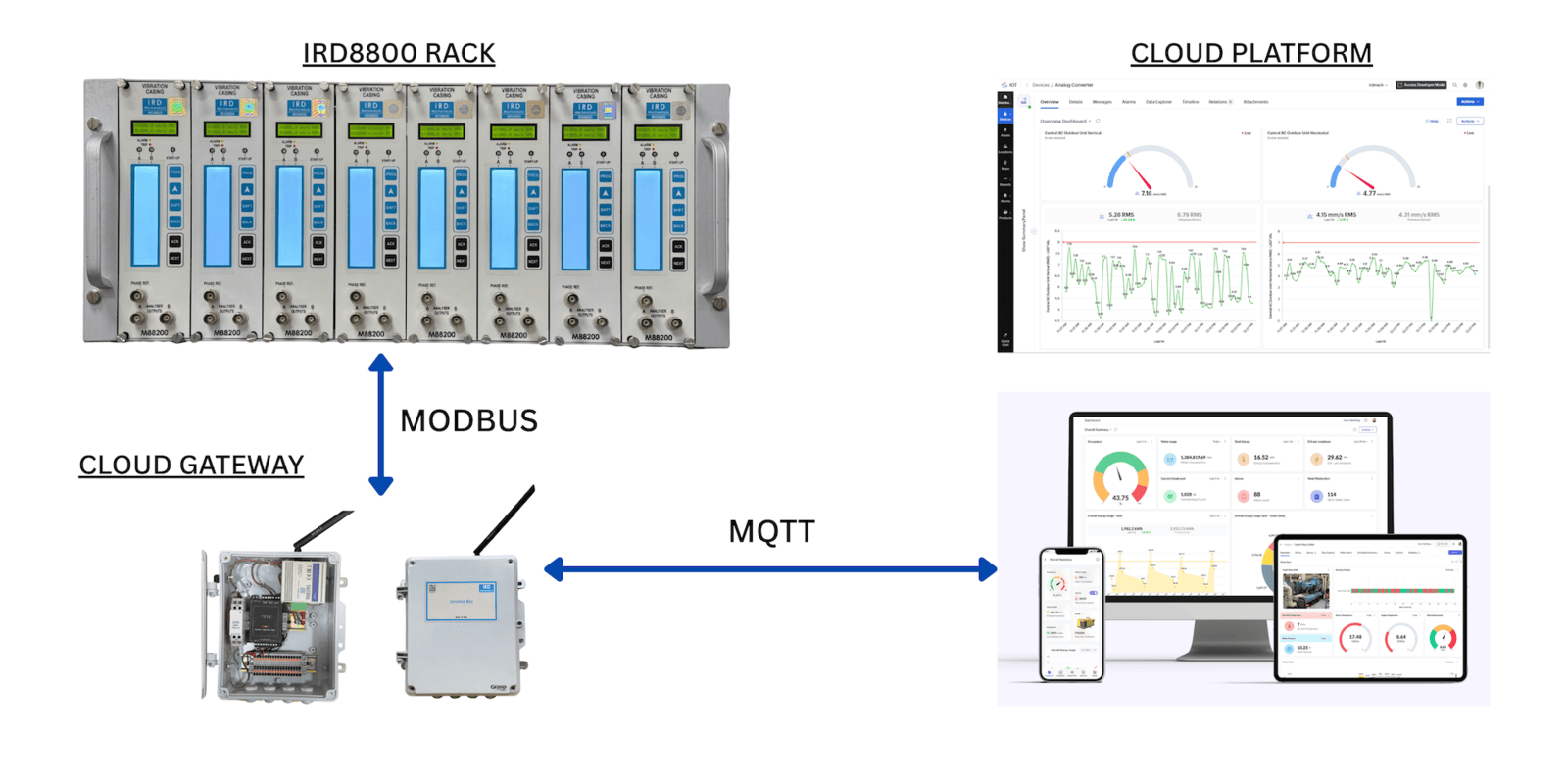
The Vibration Monitoring Modules as well as other Parameter Monitoring Modules of IRD8800 are equipped with MODBUS Output. Each Module acts as a Slave in a MODBUS Network. Both MODBUS RTU as well as MODBUS TCP Outputs are available and any 1 can be selected for a particular module. This MODBUS Output can be taken to a Cloud Gateway like Teltonika TRB245 or any Third Party Cloud Gateway wherein the MODBUS Data gets converted to MQTT for Cloud Connectivity
Buy Spares Online
Module M88200 - Casing Vibration Module that works with Accelerometer or Velometer Input. Accepts 2 Vibration Inputs and 1 Phase Reference Input